PR – Permanent Resident (Permanent Resident/Green Card)

As a Singapore Permanent Resident (PR), you and your family can live, work, and purchase property in Singapore freely, becoming an integral part of Singaporean society. You are entitled to various benefits, such as free travel to and from Singapore, priority access for your children to the public education system, and mandatory Central Pension Fund (CPF) contributions paid by your employer on your behalf—all of which provide security for your life in Singapore.

PEP, EP, or SP work pass holders can apply for Permanent Resident status after working for a certain period. The Singapore government accepts 20,000 to 30,000 permanent residents each year to maintain a competitive population. Successful PR applicants can sponsor their spouse, children under 21, and their parents for a Long-Term Visit Pass.

Esin Business has extensive experience in helping applicants successfully apply for PR. If you need assistance, please visit our PR Application Services page for more details.

DP (Dependant’s Pass)

Dependent’s Pass: This permit can be applied for by individuals working or running a business in Singapore and holding an Employment Pass (EP), Singapore Pass (SP), or Entrepreneur’s Pass (EntrePass) for their spouse and children under 21. Children holding Dependent’s Passes can enroll directly at Singapore government primary and secondary schools.


DP Eligibility Criteria:

Salary: The sponsor’s salary must be S$6,000 or more.
Education: No education requirements.
Employment:

Before May 1, 2021, dependents of EP or Entrepreneur’s Pass holders can apply for a Letter of Approval (LOC) through their employer to the Ministry of Manpower. Once approved, they can start work immediately (without using the company’s quota). Dependent’s Pass (DP) holders under SP must apply for a Work Pass before starting work.

Permanent Citizenship (PR): Direct application is not possible, but they can apply as dependents alongside the sponsor.

Starting May 1, 2021, family members of EP or Entrepreneur Pass holders, or DP (Dependant’s Pass) holders who wish to work locally must apply for the relevant work permit (EP, SP, WP). Local employment is no longer permitted solely through a Letter of Commitment (LOC).

Qualifications for Permanent Citizenship (PR): EP and SP holders can apply independently or as family members with a sponsor.

Esin Business can assist you with the following:

1. Providing pre-application information and professional advice for DP applications;
2. Submitting DP application documents;
3. Monitoring the DP application process;
4. Investigating the reasons for rejection if a DP application is rejected, notifying you of the outcome, and following up on the resolution process.

WP (Work Permit)

A Work Permit (WP) is a work permit issued by the Ministry of Manpower for foreign workers with lower skill levels.


WP Eligibility Criteria:

No salary or education requirements;
Age requirements: Malaysian citizens (18-58 years old), non-Malaysians (18-50 years old);
Company Quota: For taxpayers in the service sector, the company quota must not exceed 8% (usually 1 WP slot for every 12 local workers; in specialized industries, 1 local worker can be replaced by 7 WP);
Company Requirements:
– Must purchase insurance with a minimum coverage of SGD 15,000;
– Deposit a security deposit of SGD 5,000.
Dependent Pass (DP):
Not eligible to apply.
Permanent Resident (PR) Requirements:
Cannot be applied directly, but can be applied as a dependent.

S Pass for Skilled Workers

The SP is a work permit issued by the Ministry of Manpower for foreign workers with intermediate technical skills.

SP eligibility criteria:

1. Salary: S$3,000, or S$3,500 for the financial sector;
2. Qualifications: Diploma, bachelor’s degree, or technical certificate (requires at least one year of full-time study);
3. Work Experience: While there is no minimum number of years, work experience is taken into account in the assessment;
4. Company Quota: SPs in the service sector cannot exceed 13% of the total workforce; other sectors are allowed 20%.
5. Dependent’s Permit (DP): Eligible for spouses and children under 21 if their salary reaches S$4,000.
6. Permanent Resident Eligibility (PR): Direct application is allowed. Dependents can apply simultaneously.

Esin Business can assist you with the following:

1. Providing pre-application information and professional advice for SP applications;
2. Submitting SP application documents;
3. Monitoring the SP application process;
4. Coordinating directly with MOM officials if necessary;
5. Responding to MOM requests and submitting additional required documents;
6. Closely monitoring post-approval arrangements after the SP application is approved;
7. Investigating the reasons for rejection, notifying clients, and managing follow-up procedures if the SP application is rejected.

“”

EntrePass (Entrepreneur Card)

Entrepass is a visa intended for entrepreneurs who wish to set up a business in Singapore. Once approved, visa holders must set up a company in Singapore and commence regular operations. After obtaining an Entrepass, you can apply for a Dependant’s Pass to bring family members (spouse and unmarried children under the age of 21) to Singapore. Entrepass holders are eligible to apply for permanent resident status in Singapore. A small-scale entrepreneur immigration scheme is available for consideration.

I. EntrePass Eligibility Criteria:

1. Educational Qualifications: No formal qualifications are required, but applicants must have relevant work or business experience, or be able to demonstrate ownership of an innovative industrial project.
2. Residence Permit for Family Members (DP): After meeting the specified criteria, applicants can apply for a Residence Permit for family members, including spouses and children under 21 years of age.
3. Eligibility for Permanent Resident (PR) Status: Direct applications are permitted. Family members may also be included in the application.

II. Singapore Business License Services (Business Entry Category):

1. Requirements for innovative industrial projects:

– Must have obtained funding from a recognized venture capital scheme or angel investor.
– Possess nationally recognized intellectual property rights (IPR).
– Collaborate in research with a recognized research institution.
– Participate in government-approved research incubation projects.
– Obtain support from Singapore government agencies.

2. Requirements for Registering a Private Limited Company:

– Own at least 30% of the company’s shares.
– Maintain a minimum paid-up capital of S$50,000.
– Appoint a company secretary.
– Register a local business address.

III. Documents required for business establishment:

Businesspeople applying for a Business Visa must prepare the following documents:
1. A completed Business Entry Application Form.
2. Innovative written documents demonstrating compliance with one of the “Innovation” requirements.
3. A business plan in the specified format.
4. A photocopy of the company’s bank account showing a minimum balance of S$50,000, if the company is applying for incorporation prior to submission.
5. A printed copy of the company’s latest business profile, if already registered.
6. A passport photo taken within the last three months.
7. A photocopy of the passport’s personal data page.
8. Written documentation of previous employment and/or business history, if applicable.
9. A copy of your academic certificates (if applicable).
10. Additional documents that may increase the chances of your application’s success, including partnership/licensing agreements, potential clients/suppliers, product certifications, accreditations, etc.
Note: All documents must be submitted in English or accompanied by a certified English translation.

IV. Procedures and Schedule for Submitting Business Establishment Applications:

Once your business registration application documents and supporting documentation are prepared, they must be submitted to the Ministry of Manpower (MOM). Enterprise SG and MOM – your application will be reviewed by two government agencies. The application process is as follows:
1. The application is submitted to MOM.
2. Once submitted, the average processing time for an Entrepreneur Pass application is approximately 6-8 weeks.
3. If your application is approved, you will receive a Letter of Approval in Principle (AIP). After that, you have 30 days to register your Singapore company, open a corporate bank account, and deposit the required share capital (assuming the company has not been incorporated prior to the application).
4. MOM will require you to submit proof of company registration documents and proof that the minimum paid-up capital has been fully deposited into the corporate bank account before issuing the Final Approval Letter (IPA).
A medical examination report may be required during the business entry process.
5. Once the Final Approval Letter (IPA) is issued, you must settle in Singapore within six months from the date of approval.
6. Within six months of receiving your Entrepreneur Pass, you must submit a lease agreement, employee Central Pension Fund (CPF) statement, the latest company registration documents, and a business plan reflecting the company’s operational status. Failure to submit these documents within the six-month deadline will result in the Entrepreneur Pass being revoked.

V. Rejection of Business License:

1. If you meet the eligibility requirements for business entry, have a strong business background, and your business can create local employment opportunities, your Entrepreneur Pass application will likely not be rejected. However, if your application is rejected, you can appeal within 90 days. The appeal processing time is 4-6 weeks.
2. Please note that Entrepreneur Pass applications will not be approved for the following sectors:
1) Cafes, hawker centers, and food courts
2) Bars, nightclubs, and karaoke establishments
3) Foot massage parlors and massage centers
4) Traditional Chinese medicine, acupuncture, and Chinese herbal medicine sales
5) Employment bureaus and feng shui services

VI. You should use the services of a professional firm:

If you are operating on a tight budget, have sufficient time and experience to prepare the necessary documents for an Entrepreneur Pass application, and are prepared to face potential rejections and appeals, you may choose to apply yourself. In other circumstances, using a trusted professional firm to handle your Entrepreneur Pass application is a better option:
1. An experienced professional firm will help you ensure all necessary and supporting documents are completed accurately and efficiently, maximizing your chances of approval.
2. The agent will guide you in developing a business plan that meets government requirements. Typically, you will need to provide information about the risks and prospects of your business.
3. The professional agent will sponsor your application, exempting you from providing a US$3,000 bank guarantee to the authorities.
4. The agent will file and monitor the progress of the application, identify the reasons for rejection, and file appeals if necessary.
It should be noted, however, that the authority to grant an Entrepreneur Pass rests solely with government departments. Professional agents do not have decision-making authority in the application process.

VII. Business License Extension Guide:

The Entrepreneur Pass validity period is set by the government as one or two years. Typically, a renewal form will be sent to you three months before the expiration date. You must apply for a renewal within two months of the expiration date.

The following documents are generally required to apply for an Entrepreneur Pass renewal (or as stated in the renewal reminder letter):
1. A recent copy of the Business Registration Certificate.
2. The latest audited financial statements.
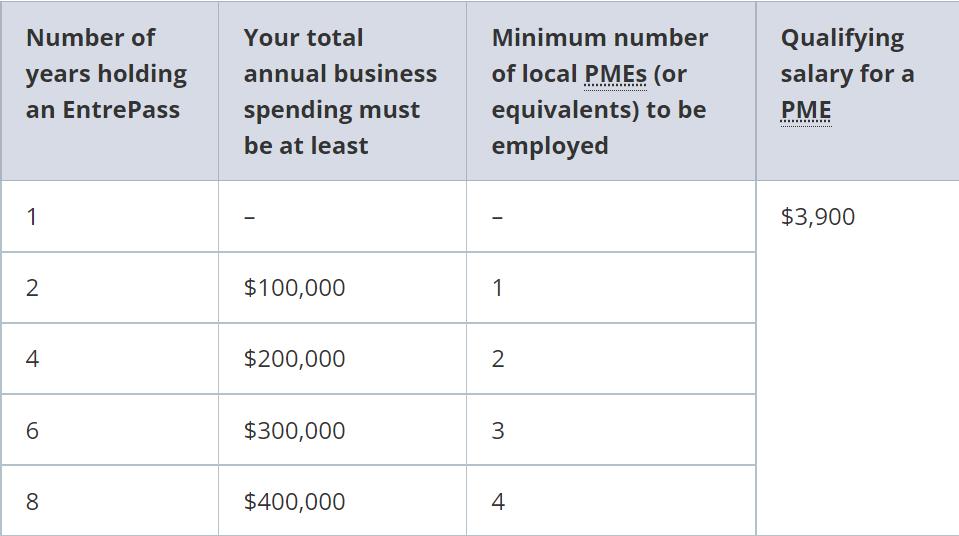
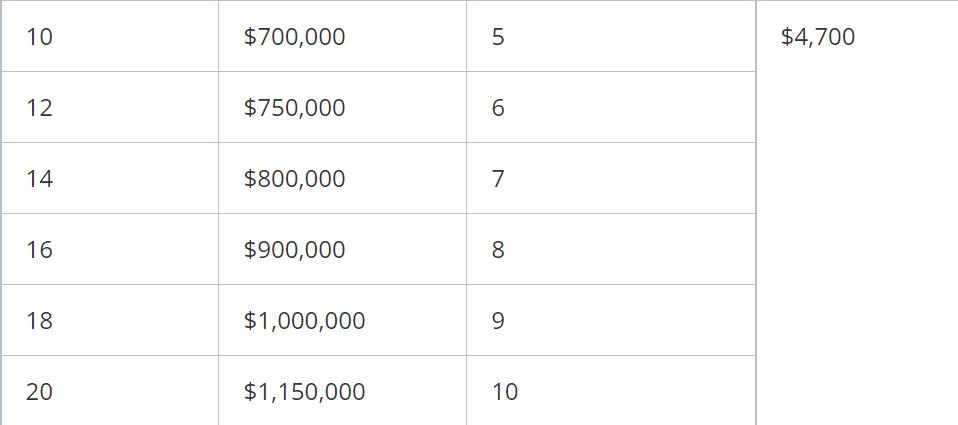
3. The local employee’s highest educational certificate. Please note that local employees must hold at least a National Technical Certificate (NTC2), National ITE Certificate (NITEC), or Vocational Qualification (obtained after a minimum of two years of full-time study).
4. The employee’s CPF statement.
5. An office lease agreement.
6. Supporting documents proving the company’s operational activities, such as an office lease agreement, client correspondence, issued invoices, or other evidence of contract tenders. It is important to note that authorities must verify that the company is actually conducting business and is not simply a fictitious entity.
“” “”

VIII. Esin Business can help you in the following areas:

1. Provide pre-application information and professional advice for Entrepass applications;
2. Develop and compile business plans;
3. Prepare project plans and Entrepass application documents as needed;
4. Monitor the Entrepass application process;
5. Coordinate directly with MOM officials if necessary;
6. Submit additional documents as requested by MOM;
7. Closely monitor post-approval arrangements following Entrepass approval;
8. If an EntrePass application is rejected, we will determine the reasons for the rejection, notify you accordingly, and manage the follow-up process.

EP – Work Pass

An Employment Pass (EP) is a work pass issued by Singapore to foreign professionals (managers, supervisors, or specialists). This pass is typically granted to experienced professionals, managers, executives, or project specialists.

The initial validity of an Employment Pass (EP) is typically 1-2 years, and it can be extended before its expiry (renewal also requires meeting the Compass Points System criteria). Holding an EP also qualifies you to apply for Singapore Permanent Citizenship.

I. EP Eligibility Criteria:

1. Salary: Specific salary standards for each position can be found in the PMET (Professional, Management, Executive, and Technical) salary guide published by the Ministry of Manpower.
2. Eligibility: Meeting the Compass points system criteria is sufficient.
3. Quota: There is no formal quota requirement. Each application is evaluated by the authority based on documentation from the employer and applicant.
4. Dependent’s Pass (DP): Applicable to those earning SGD 6,000 or more. Long-Term Visit Pass (LTVP) for parents is available to those earning SGD 12,000 or more.
5. Permanent Citizenship (PR) Eligibility: Direct applications are allowed. Family members can also apply simultaneously.

II. Documents required to apply for a Employment Pass:

1. EP Application Form, which must be signed by the employing Singaporean company.
2. Curriculum Vitae detailing the applicant’s work history and experience.
3. Copies of academic certificates and previous employment references.
4. One passport photograph taken within the last three months.
5. Photocopy of the applicant’s passport data page.
6. Photocopy of the Singaporean company’s business profile.
7. Detailed description of the applicant’s job responsibilities.
8. Detailed description of the company’s business scope and/or products.
9. Additional supporting documents may be requested by the government as needed.
Requirements: Non-English documents must be officially translated into English.

III. Procedures and Schedule for Applying for Employment Pass:

1. Completed application forms must be submitted to the Ministry of Manpower (MOM) along with the required supporting documents. Applications can be submitted manually or online. Online applications are generally faster (provided the company has registered its own online EP account), but they do not support the submission of supporting documents.
2. For online applications, once submitted, the standard processing time varies between 1 and 10 business days, depending on the eligibility of the employer and the applicant. For manual applications, MOM processing time is 3 to 6 weeks from the date of submission.
3. The overall application and approval time can range from a few days to several weeks, depending on various factors (such as the completeness of the applicant’s documents, whether the application process is online or manual, etc.).

IV. Employment Pass Application:

1. Once your Employment Pass visa application is approved, the Ministry of Manpower (MOM) will issue an Approval-in-Principle (IPA) letter to your employer’s registered address. The IPA letter is valid for six months, during which time you must collect your Employment Pass visa.
2. To collect your Employment Pass visa, MOM requires you to present the IPA letter, your passport, and copies of any additional documents specified in the IPA letter.
3. If you are overseas and require an entry visa, the IPA letter serves as a single-entry visa, allowing you to enter Singapore to collect your Employment Pass visa. If you have applied for a Dependent’s Pass and/or Long-Term Visit Pass visa for your family members, you can collect these visas together with your Employment Pass visa upon collection.
Note: Your EP application may be rejected. Therefore, do not make any relocation plans until you receive your approval letter (IPA).

V. Refusal of Employment Pass:

In fact, not all Employment Pass applications are approved. When considering an application, the Ministry of Manpower evaluates the applicant’s academic qualifications, work experience, and employer background. If the initial application is rejected, we will discuss the reasons for the rejection with the Ministry. If possible, we will address the issues raised by the authority before filing an appeal. If the additional details submitted are accepted by the Ministry, your application may be approved. Appeal processing time typically takes 4 to 6 weeks.

VI. Employment Pass Extension Procedure:

Generally, three months before your Employment Pass expires, an extension application form will be sent to your employer’s address. The extension application should be completed and submitted to the Ministry of Manpower at least four weeks before your Employment Pass expires. If your extension application is approved, your employer will receive an approval letter. You will then need to visit a Ministry of Manpower office to pick up your new Employment Pass, or the Ministry will send you one.

VII. Esin Business can help you in the following areas:

1. Provide pre-application information and professional advice for Employment Pass (EP) applications;
2. Submit and manage EP application documents;
3. Monitor the progress of EP applications throughout the process;
4. Coordinate directly with Ministry of Manpower (MOM) officials as needed;
5. Respond to MOM requests and submit additional documents as requested;
6. Closely monitor post-approval arrangements after EP approval;
7. Investigate reasons for EP application rejections and formulate effective appeal strategies.

PEP (Personal Work Permit)

The Personal Employment Pass (PEP) is a professional work permit established by Singapore for high-income foreign workers, representing the highest tier within the work permit framework. Holders of this pass are not restricted to a single employer, allowing them considerable flexibility in their work arrangements. When changing jobs, they simply need to notify the Ministry of Manpower of the change in company details, without the need to apply for a new pass.

1. PEP holders are not allowed to establish their own businesses in Singapore, meaning they cannot participate in corporate activities or work for their own companies.
2. PEP holders can serve as salaried directors in a company, provided they do not own the company.
3. The eligibility requirements for PEP applications are stricter than those for an Employment Pass. Please refer to the Eligibility section below for details.
4. The main advantage of a PEP is that holders can change jobs without reapplying for a visa, provided they remain employed for at least six months. During this period, PEP holders can stay in Singapore without requiring another residence visa.
5. PEP holders are eligible to apply for a Dependant’s Pass for their spouse and children under 21. They can also apply for a Long Visit Pass for their parents.

The Personalized Employment Pass offers a flexible work permit option for high-income professionals. There are no minimum qualification requirements, but pass holders must receive a fixed monthly salary of at least S$22,500. To maintain the PEP, you must be continuously employed in Singapore (with no periods of unemployment exceeding six months) and earn a fixed salary of at least S$270,000 per calendar year.

A fixed monthly salary of S$22,500 or more, with a minimum fixed annual salary of S$270,000 per calendar year.

Family Residence Permit (DP): Spouses, children under 21, and parents can apply directly for Family Residence Permit and Long-Term Visit Permit.

Qualifications for Permanent Resident (PR): Direct application is possible. Family members can also apply simultaneously.

The Ministry of Manpower has not specified document requirements for applications; however, you will need to include the following documents when completing the application form:
1. Your passport
2. Employer’s name and address, if applicable
3. Employment and salary details, if applicable
4. Local contact details (for foreign professionals; local contact details can be provided upon approval)
5. Details of Dependent Passport holders, if applicable.
6. Details of Long-Term Social Visit Passport holders, if applicable.

If you do not currently hold a Singapore Employment Passport, the Ministry of Manpower may request additional details after your PEP application is submitted. Additional documents required for non-P1 Employment Passport holders include:
1. Copy of passport (Personal Details Page)
2. Current and/or previous employment contracts, if applicable
3. Pay slips and bank statements for the last three months
4. Most recent tax assessment notice
5. Academic certificates
6. Summary of work experience (e.g., curriculum vitae/CV)
Please note that non-English documents must be officially translated into English by a licensed translator, the Embassy/Consulate, or a notary public.

The processing time for a PEP application is approximately 4 to 6 weeks. Once your PEP application is approved, you will receive a Letter of Approval in Principle (IPA). This letter is valid for 6 months, and you must collect your Employment Pass Card at the address specified by the Singapore Ministry of Manpower (MOM) within this period. You will also need to bring other necessary documents to collect your card, such as your original medical examination report.

1. Once you obtain your PEP pass, it is valid for three years.
2. During this period, you must promptly notify the authorities with the following updated information:
1) Employment:
You do not need to apply for a new visa when changing employers. However, you must still notify the Ministry of Manpower (MOM) of your updated status, whether you have found a new job or become unemployed. This can be done using the relevant PEP declaration form, which must be submitted within seven days of the change in employment status. Your current or former employer must also provide written notification to the authorities.
Local Contact – If your local contact details change, you must notify the authorities using the appropriate notification form.
Salary – You must declare your annual salary at the end of each calendar year, within 30 days before the end of the year. You can also use the relevant PEP form.
Travel Document (Passport) – If you have changed (or renewed) your travel document (passport), you must update the information with the MOM using the Personal Data Form.
PEP Card Replacement – ​​If you lose or damage your PEP card, you must apply for a replacement online.
Residential Address – If you change your residential address, you must notify MOM online.
2) Extension:
Unlike other work permits, a PEP cannot be extended after its three-year validity period. After three years, you can continue working in Singapore on a Work Permit (tied to your employer) or apply for Singapore Permanent Citizenship.
You can also cancel your PEP at any time. Please note that once cancelled, you will not be eligible to apply for a new PEP.

1. Provide pre-application information and professional advice for PEP applications;
2. Submit PEP application documents;
3. Monitor the PEP application process;
4. Coordinate directly with MOM officials as needed;
5. Respond to MOM requests and submit additional documents as requested;
6. Closely monitor post-approval arrangements after PEP applications are approved;
7. Investigate the reasons for rejection if PEP applications are rejected and formulate an effective appeal strategy.

Singapore Tech Pass

Introduction to Tech Pass

In early 2020, the Singapore Economic Development Board announced the introduction of a new visa category, the Tech Pass. This initiative aims to attract top global tech talent to Singapore, thereby boosting the development of the country’s tech ecosystem and strengthening Singapore’s position as a leading regional tech hub.


Who is eligible to apply for the Tech Pass?

Applicants do not have to be employed by a Singaporean company. They can be employees of that company, or directly involved in entrepreneurial activities, investments, or serve as directors in Singapore. Applicants only need to meet two of the following three criteria to qualify for the Tech Pass. Holders of existing work passes such as the Employment Pass or Personalized Employment Pass can also apply to convert their passes to the Tech Pass if they meet the eligibility requirements:

A fixed monthly salary of at least S$20,000 or its equivalent in foreign currency for the past year;

A minimum of five years of leadership experience in a technology company with a market capitalization of at least US$500 million or a minimum funding of US$30 million; and

A minimum of five years of cumulative experience leading the development of technology products with at least 100,000 monthly active users or a minimum revenue of US$100 million.


What supporting documents are required?

  1. An original, completed, and signed Tech Pass application form (if applying for a Dependent Pass for a spouse and dependents under 21, the corresponding Dependent Pass application form must also be completed; if applying for a Long-Term Pass for a parent, the corresponding Long-Term Pass application form must also be completed);
  2. Relevant supporting documents demonstrating compliance with the Technology Pass requirements;
  3. A photo page of the applicant’s passport; and
  4. If a Dependent Pass/Long-Term Pass is required, proof of the relationship between the dependent and the applicant, along with documents proving compliance with relevant vaccination requirements.


How long does the application process take?

The Technology Pass program opened for applications in January 2020, with a total of 500 slots available on a first-come, first-served basis. The Technology Pass is valid for two years and can be extended if the specified criteria are met, with the extension also valid for two years. The initial application process for the STP typically takes approximately eight weeks. The Singapore Economic Development Board (EDB) will assess all submitted documents and evaluate the applicant’s potential contribution to Singapore’s technology ecosystem. If the EDB requires additional information from the applicant, the actual processing time may be extended. Once approved, the applicant will receive an electronic letter of approval in principle (IPA).


What steps must be taken after receiving the IPA?

  1. The applicant must travel to Singapore to process the STP within the six-month period granted by the IPA. In principle, extensions of the IPA are not permitted.
  2. The applicant must commence work or business activities in Singapore and must be present in Singapore to process the STP.


What are the requirements for extending the STP?

To extend the STP after its expiry, the applicant must meet one of the following two criteria:

  1. Based on the latest assessment notice from the Inland Revenue Authority of Singapore (IRAS), the applicant has earned taxable income of at least S$240,000, which may consist of salary income, business income, or a combination of both; or
  2. Demonstrate annual business expenditure of at least S$100,000 and employ at least one Singaporean professional/manager/executive or three full-time employees.


In addition, meet at least two of the following ten criteria, with at least one from criteria one to five:

  1. Established a company in Singapore that provides technology or technology-based products/services;
  2. Held a leadership position in a Singapore technology company (e.g., Chief Executive Officer, Chief Technology Officer, Asia-Pacific Regional General Manager);
  3. Held leadership positions in two or more Singapore technology companies;
  4. Employed in a Singapore company in a technical role leading a company team (e.g., Senior Engineer or Senior Researcher leading a team in a specific technology area);
  5. Employed in two or more Singapore companies in a technical role leading a company team;
  6. Served as a member of the board of directors of a Singapore company (which does not have to be a technology company);
  7. Acted as an advisor/mentor to a Singapore startup;
  8. Held a professor/lecturer/visiting professor/visiting lecturer position at a Singapore higher education institution;
  9. Provided certain forms of training (e.g., workshops, corporate training programs) not covered by points 7 or 8 above; and
  10. Invested in one or more Singapore technology companies.

Entrepreneur Immigration to Singapore

Immigration of independent workers to Singapore

Immigration for self-employed workers in Singapore refers to the process whereby applicants register a company in Singapore and, as shareholders, directors, or senior management personnel of that company, apply to the Ministry of Manpower (MOM) for local residence status or a visa (either an Employment Pass (EP) or an EntrePass). Once the company reaches a certain operational scale and the visa holder has maintained their status for two years, an application for Permanent Residency (PR) is submitted to the Immigration and Checkpoints Authority of Singapore. The applicant and their family members transition from EP visa to PR status, thereby obtaining Singaporean permanent residency. This immigration pathway generally requires meeting certain criteria, including demonstrating sufficient financial capability and entrepreneurial skills, as well as making local investments or establishing businesses that contribute to the country’s economic development.

Why choose immigration for entrepreneurship in Singapore?

Building bridges for opening multi-currency accounts

Singaporean companies can open multi-currency accounts, which facilitate smooth international trade.

Enhancing the company’s international image

A well-structured financial system, no foreign exchange controls, and access to global markets.

Corporate Tax Planning

The corporate income tax rate in Singapore is capped at 17%, with newly established companies eligible for significant tax relief.

Family immigration

Children and parents can apply directly for family visas and long-term visit visas.

Identity Planning Abroad

Customers can move to Singapore by changing their Employment Pass (EP) status to Singapore Permanent Resident (PR) status.

The Advantages of Bilingual Education

Children can hold Dependent Passes to attend school in Singapore and enjoy high-quality bilingual education.

Employment Pass (EP)

EP Application Requirements

  • The principal applicant must have extensive professional or entrepreneurial experience.
  • Academic qualifications must be supported by a verification report from the China Higher Education Student Information and Career Center (CHESICC).
  • Establish a company in Singapore, acting as a shareholder and director or senior management personnel.
  • Specific salary standards for positions may refer to the PMET (Professional, Management, Executive, and Technical) salary guidelines published by the Ministry of Manpower.
  • Meet the requirements of the Compass point system.


More details

EntrePass

Eligibility requirements for EP applications

No academic qualifications are required, but applicants must have relevant work or business experience, or be able to demonstrate innovative projects in the industrial field, including:

  • Projects that have been funded by venture capital schemes or recognized angel investors.
  • Holders of nationally recognized intellectual property rights (IPR).
  • Research collaborations with accredited research institutions.
  • Research incubation projects approved by the government.


More details

Singapore Work Permit (EP)

Category One: Employment Pass (EP) is valid for foreign nationals working in Singapore, generally as professionals, managers, or skilled workers employed by companies or institutions registered in Singapore.

EP applicants must generally meet the following criteria:

– Have a job offer in Singapore with a minimum salary of S$3,600 (approximately RMB 21,000).

– Have relevant educational qualifications and professional expertise, or demonstrate exceptional vocational skills.

– Have sufficient funds to cover living expenses in Singapore. If you meet the above criteria and have a valid job offer in Singapore, you are eligible to apply for an Employment Pass.

Category Two: Independent Entrepreneurs

– Seeking Permanent Citizenship through small-scale investment entrepreneurship.

– Want to enter Singapore quickly through an accelerated and affordable pathway.

– Currently do not have urgent Permanent Citizenship application requirements, but need a valid entry visa and unrestricted travel rights.

Family Visa (Immediate Family Members)

  1. During the EP/EntrePass period, if the reported monthly salary exceeds SGD 6,000, spouses and children under the age of 21 can apply for a Dependent Pass (DP).
  2. During the EP/EntrePass holder period, if the reported monthly salary exceeds SGD 12,000, parents may apply for a Long-Term Visit Pass (LTVP).
  3. When EP/EntrePass holders apply for Permanent Residency (PR), spouses and children under the age of 21 can be included as dependents in the PR application.
  4. Parents and children aged 21 and above cannot apply for PR at the same time. However, parents can apply for a Long-Term Visit Pass (LTVP) which is valid for five years.

Independent Entrepreneur Visa Application Process

✔ Signing of agreements

✔ Registration of entities in Singapore

✔ Opening of corporate bank accounts

✔ Submission of Employment Pass/Entre Pass applications

✔ Approval of Employment Pass/Entre Pass

The Advantages of Esinbiz

The Singapore-based team

Expert in Singapore immigration policy, Partner of the Singapore Economic Development Board (EDB)

High success rate

The success rate of immigration program applications is 96%.

Professional writing team

Immigration experts professionally design, compile, and refine immigration proposals in Mandarin and English, as well as assist in the organization of comprehensive documentation.

Made to order

Clients enjoy dedicated and personalized service with tailored family office immigration solutions.

Attorney Certification

Esinbiz’s in-house legal team provides strict oversight for your projects.

End-to-end service

Design and establishment of family office structures, along with comprehensive services including identity planning.

Comprehensive after-sales service

Airport shuttle service, property rental, domestic worker recruitment, utility connection management, and telephone card/travel card arrangements.

Children’s Education Planning

Assisting clients in planning their children’s education abroad and applying for admission to universities.

Successfully acquired Singapore

Key Considerations for Self-Employed Workers Switching from EP to Permanent Residence Permits

✔ Singapore companies continue to operate continuously and create local job opportunities in Singapore

✔ Companies maintain profits with healthy financial reports

✔ Applicants must have a bachelor’s degree or higher qualification and substantial corporate management experience

✔ Esinbiz Immigration tailors immigration solutions to each client’s specific circumstances; clients are required to actively cooperate in providing all documents necessary for the application.

Global Investment Program GIP: Registration Form

Introduction

The Singapore Global Investment Program (GIP) is an investment immigration program launched by the Economic Development Board (EDB). Launched in 2005, this program is Singapore’s only official investment immigration program and the only pathway that allows entire families to obtain Singapore Permanent Resident status at once.

Investment Plan:

Option A: Applicants must invest a minimum of S$10 million (including paid-up capital) to establish a new business entity or invest in an existing business.

Option B: Applicants who choose to invest in Singapore must commit S$25 million to a fund selected by GIP, which is a tenfold increase from the current requirement.

Option C: Family Office applicants must establish one Family Office with a minimum of S$200 million in assets under management. This applies to investors who plan to establish a Family Office. Under the new regulations, applicants must establish one Family Office in Singapore with a minimum of S$200 million in managed assets, of which at least S$50 million must be invested across four categories. This must be completed within 12 months of the approval letter being issued.

Eligibility Criteria:

✔ You must have at least three years of entrepreneurial or business experience.
✔ The company’s revenue for the last fiscal year must not be less than S$200 million.
✔ The average revenue for the previous three fiscal years must not be less than S$200 million.
✔ If your company is privately owned, you must own at least 30% of the shares.
✔ The company must operate in an industry listed in the industry list determined by Singapore.

✔ Your immediate family must hold at least 30% of the shares in the company you declare for this program, or be the largest shareholder.
✔ The company’s annual turnover in the most recent year must not be less than S$500 million.
✔ The average annual turnover over the past three years must not be less than S$500 million.
✔ You must be part of the company’s management (e.g., executive, board member).
✔ The company must operate within an industry listed in Singapore’s designated industry list.

✔ You must be a founder and one of the largest individual shareholders of a company with a minimum market capitalization of S$500 million.
✔ The company must be funded by a leading venture capital firm or private equity firm.
✔ The company must operate in a sector listed among those designated by Singapore.

✔ You must have at least five years of experience in entrepreneurship, investment, or management.
✔ You must have a minimum investable net worth of S$200 million.

Additional assessment criteria for prospective participants in Scheme A:

  1. You must submit a comprehensive business or investment plan for a five-year period in accordance with the requirements listed in Appendix B, including annual financial projections and a recruitment plan.
  2. You must achieve the objectives listed in the business or investment plan within five years of making the investment.
  3. Your business must be included in the business sectors listed in Appendix A.

Other supporting applications:

Spouses and children (under 21 years of age) of Singapore investment immigrants may apply for permanent residence with the main applicant through the Global Business Investor Program as dependent applicants. Male dependents are required to undergo National Service in Singapore. Please visit www.ns.sg/iPrepNS for more information on Singapore’s National Service regulations. Unmarried children aged 21 and above and parents are not eligible to apply for permanent residence status through your Global Investor Program application. However, they may apply for a Long-Term Visit Pass (LTVP) valid for up to five years. The validity period of this pass depends on the validity period of the main applicant’s Re-entry Permit (REP) and may be extended.

Once you have obtained permanent residence status, you will be granted a re-entry permit valid for five years. Permanent residence status holders must have a valid re-entry permit to enter and exit Singapore. This permit allows permanent residence status holders to maintain their permanent residence status while outside Singapore.

After the initial five-year period, you must meet the following requirements to renew your re-entry permit.

1. Three-year extension:
– You must have fulfilled the investment requirements set out in Scheme A or B of the Global Investor Program;
– You must fulfill one of the following requirements:
– You have established a qualifying business entity in Singapore, employing five or more Singaporean employees, with a minimum annual business expenditure of S$1 million;
– You or at least one dependent applicant must have resided in Singapore for more than half of the validity period of the residence permit.

2. Five-year extension:
– The investment requirements under Scheme A or B of the GBI Program must have been met;
– The business entity must have been established in Singapore, employing five or more Singaporean employees, with total annual business expenditure reaching at least S$1 million;
– You and your dependents must have resided in Singapore for more than half of the period.

To apply for the investment scheme, please submit your application documents in accordance with the following procedure:

Step One – Payment of Application Fee (Received by the Singapore Government)
1. You are required to pay an application fee of SGD 7,000 (received by the Singapore Government) before submitting the application form.
2. This application fee is payable in a single installment and is non-refundable.
3. The application fee must be transferred via international bank transfer or local interbank transfer to the Economic Development Board’s bank account.
4. After payment, keep the original transfer receipt and submit the application form within one month of the transfer.

Step 2 – Complete the Application Forms (Form A, Form B, and Form C)
Complete the application forms: Form A (Personal Data), Form B (Proposal and Investment Plan), and Form C (Payment Details).

Step 3 – After completing the application form (Form A, Form B, and Form C), submit the completed application form (Form A, Form B, and Form C).

Step 4 – Submit the following supporting documents in printed form to the government:
1. A letter of intent to comply with the terms and conditions of the Global Investor Program.
2. A sworn statement.
Note:
– If made in the United Kingdom or a Commonwealth country, the Affidavit must be witnessed by a Notary Public, Justice of the Peace, or other authorized official in accordance with the laws of that country.
– For non-Commonwealth countries (e.g., China), all Affidavits must be made before an authorized official of the Singapore Embassy or Consulate.
– If the applicant is in Singapore, the affidavit may be signed before a Local Commissioner for Oaths, Justice of the Peace, or Judge.
3. Affidavit regarding the Global Business Investor Program application documents (attached to Form A).
4. Affidavit regarding the investment proposal and plan (attached to Form B).
5. Details of the application fee payment, including a scanned copy of the proof of payment (attached to Form C).
6. Singapore Entry Permit Application Form – Form 4 (one original and one photocopy are required for the main applicant and each dependent applicant).
7. Supporting documents required for Form A, Form B, and Form C.
Note: Applicants must submit an official English translation for foreign language documents, which must be certified by a public notary.
Documents certified by a notary must be valid for one year.

1. After receiving all the necessary documents, the government will begin processing your application. If you meet the government’s requirements, an interview will be scheduled.
2. If your application is approved, you will receive a Letter of Approval in Principle (AIP) for Permanent Resident (PR) status from the Immigration and Checkpoints Authority (ICA). This approval letter is generally valid for six months.
3. Within the six-month validity period of the AIP, you must fulfill the investment commitment stated in your agreement. This requires an investment of S$10 million (may vary depending on the specific scheme) through a separate personal account opened in your name at a bank registered in Singapore.
4. After completing the required investment, you must submit supporting documents to Contact Singapore. These documents include share certificates and bank statements proving that the investment was made through a separate personal account opened in your name at a bank registered in Singapore. These documents will be kept by Singapore for five years.
5. If your chosen investment plan involves establishing a new business entity or expanding existing commercial operations, you must submit audited financial statements annually at the end of the second, third, and fourth years after your investment.
6. After receiving your investment verification documents, you will be notified to proceed to the Immigration and Checkpoints Authority (ICA) of Singapore to complete the formalities for your permanent residence application.

The above documents should not be construed as a guarantee of the continuation of the Global Business Investor Program (whether within the existing framework or a modified one), nor as a document of approval for applications under the Global Business Investor Program or for the extension of re-entry permits. Attachment:
List of Investment Sectors Eligible for Scheme A under the Singapore Investment Immigration Program
(a) Aviation
(b) New Energy
(c) Automotive Engineering
(d) Chemical Industry
(e) Consumer Products
(f) Electronics
(g) Energy Industry
(h) Engineering Services Industry
(i) Healthcare Industry
(j) Information and Communication Products and Services
(k) Logistics and Supply Chain Management Industry
(l) Maritime Affairs and Offshore Engineering Industry
(m) Media Industry
(n) Medical Technology Industry
(o) New Technologies (Smart Systems, Nanotechnology, Emerging Technology Sectors)
(p) Natural Resources Industry
(q) Security Technology and Management
(r) Aerospace
(s) Shipping
(t) Pharmaceuticals and Biosciences
(u) Precision Engineering
(v) Professional Services
(w) Commercial Activities Related to the Arts
– Trading in Physical Artworks, e.g., auction houses, art storage
– Trading in Performing Arts
(x) Sporting Goods
(y) Family Wealth Management and Financial Services

After the official commencement of Singapore Permanent Citizenship status, applicants will be granted a Re-entry Permit valid for five years. Permanent Citizens are required to have a valid Re-entry Permit to enter and exit Singapore. This permit allows Permanent Citizens to maintain their Permanent Citizen status while outside Singapore.

After the initial five-year period, you must meet the following criteria to renew your Re-entry Permit:
Three-year extension: The applicant has established a business entity in Singapore or has resided in Singapore for more than half of the time (Main applicant or at least one dependent applicant)
Five-year extension: The applicant has established a business entity in Singapore and has resided in Singapore for more than half the time (Main applicant and dependent applicants)

What are the specific requirements for entity investment?
There are no specific requirements, although there are recommended sectors. The Singapore Economic Development Board (EDB) offers a variety of tax policies and incentives tailored to different industries. The total annual business expenditure of a commercial entity must reach at least S$1 million, covering expenditures from both the parent company and subsidiaries. Tax reduction provisions apply between China and Singapore, allowing for a 50% tax reduction when transferring income from domestic joint ventures to foreign companies.

What is the current approval rate for Singapore investment immigration applications?
Following the general election, the approval rate and processing speed of Singapore investment immigration applications have increased significantly, with stable policies. However, specific official figures have not yet been published. The Population White Paper released by the Singapore government in January 2013 proposed a 30% increase in population over the next 17 years, with a target population of 6.5 to 6.9 million by 2030. Singapore’s current total population stands at 5.3 million, comprising approximately 3.29 million citizens, with the remainder being permanent residents and non-residents. The White Paper proposes that by 2030, the citizen population, plus new citizens, will increase to between 3.6 million and 3.8 million. Permanent residents will remain at the current level of between 500,000 and 600,000, with the rest being non-residents. To achieve this target, in addition to introducing 15,000 to 25,000 new immigrants each year, 30,000 foreign nationals will be approved for permanent residence, from which suitable candidates will be selected for citizenship.

What type of entrepreneur is more likely to be approved?
Those with a strong business background, with few restrictions on industry sectors. Industry sectors that have been successfully approved include asset valuation, finance, food, metal smelting, mining, forestry, steel trading, industrial machinery manufacturing, and rubber trading.

What if children and parents are not registered in the same family register? Can those over the age of 21 apply together with their parents?
Those who are not registered in the same family register must include a birth certificate from the hospital. Children over the age of 21 cannot apply together with their parents.

How do I apply for a Singapore passport?
Permanent residents can apply for a passport after 1.5 to 2 years. The Immigration Authority assesses each case individually, prioritizing businesses that align with Singapore’s policy objectives and corporate needs, without rigid criteria. A Singapore passport provides visa-free access to more than 150 countries, including the United States, Canada, Japan, and the European Union.

The above information answers common questions that often arise during the Singapore investment immigration application process.

Company Registration in Dubai

The United Arab Emirates (UAE) is one of the most dynamic trading hubs in the Middle East. As one of the seven emirates in the UAE, Dubai has developed into an ideal business center and strategic base, offering a continuous flow of commercial opportunities, investor-friendly regulations, a robust financial system, comprehensive commercial and residential facilities, and an abundant workforce. With extensive experience in establishing multinational companies, Esin Business provides customized Dubai company registration solutions tailored to client needs, facilitating smooth establishment and operations in compliance with regulations.

Company Registration in Dubai

Types of Companies: The general forms of company establishment in Dubai include free zone companies, mainland companies, and offshore companies. Different types are suitable for different business scenarios, and the requirements for establishment also vary slightly.

Shareholder Requirements: Allows 100% foreign ownership; shareholders can be individuals or companies.

Director Requirements: Minimum of 1 director; some free zones require the appointment of a company secretary or local contact.

Registered Capital: Some free zones have no paid-up capital requirements; however, if certain licenses are involved, the minimum capital threshold may be higher.

Registered Address: A physical or virtual office within the United Arab Emirates is required; our company can assist in providing registered address services in designated free zones or local areas.

Documents Required for Registration

Proposed company name in English (some free zones accept names in Arabic)

Description of main business activities (must be in accordance with the scope of the license in the relevant free zone)

Identity documents of shareholders and directors (copies of passports, etc.)

Permit letter from current employer (applicable to work visa holders)

Company articles of association and list of shareholders (must be certified and legalized in the country of origin)

Explanation of ownership structure (including ownership proportions)

Registered address documents (not required if provided by our company)

Parent company registration documents (applicable to shareholders in the form of legal entities)

Double-certified power of attorney (if appointing a third party as an intermediary)

Overview of the Company Registration Process

Establishing a company in the United Arab Emirates involves a structured process and must comply with certain regulations and procedures.

  1. Company license processing (3–5 business days)
  2. Company immigration card registration and electronic channel system (*E-Channel*) (5–7 business days)
  3. Issuance of electronic visa (*E-VISA*) (3–5 business days)
  4. Change of identity status (1 business day)
  5. Health check, Emirates ID card application, and insurance (7–10 business days)
  6. Residence permit approval (3–4 business days)

Taxation Summary

  • Corporate Income Tax: Standard rate of 9%; companies with taxable income below 375,000 dirhams (approximately 100,000 USD) are exempt from corporate income tax.
  • Personal Income Tax: There is no personal income tax.
  • Value Added Tax (VAT): Standard rate of 5%; taxable income above 375,000 dirhams (approximately 100,000 USD) must be registered and pay tax, while income above 187,500 dirhams (approximately 51,000 USD) may choose to register and pay tax.
  • Import Tax: Standard import duty rate of 5% of the CIF (Cost, Insurance, and Freight) price; certain goods may be subject to additional consumption tax.

Tax Incentives and Policies

✅ Tax Exemption in Free Zones
Companies established in eligible free zones can enjoy full corporate income tax exemption for up to 50 years, applicable to most service, trading, and technology companies.

✅ 100% Foreign Ownership and Freedom to Transfer Profits
No local shareholders are required; company profits and capital can be sent abroad without foreign exchange restrictions.

✅ Import Duty Exemption
Some free zones offer import duty exemptions for equipment and raw materials, as well as faster customs facilities.

✅ Double Taxation Agreements
The UAE has signed double taxation avoidance agreements with more than 130 countries, which are beneficial for cross-border tax planning and dividend distribution.

Advantages of Establishing a Company in Dubai

  • Foreign investors can own 100% of the company.
  • VAT exemption for eligible goods in certain free zones, and corporate tax exemption for eligible income.
  • A choice of various types of licenses — including dual licenses that allow some companies in free zones to also operate on the mainland.
  • China-friendly policies, stable politics, and visa-free entry for Chinese passport holders.
  • Advanced infrastructure, excellent working and living conditions — one of the best cities in the world to work and live in
  • Freedom in the distribution of company profits without restrictions; shareholders are free to manage company profits

If you are planning to expand your business in the Middle East, please contact us for:

  • Company establishment structure planning and free zone selection advice
  • Arrangement of registration processes and document lists
  • Tax planning and compliance guidance
  • Assistance with opening local bank accounts and visa applications
  • Business secretarial and daily compliance support

We will help you establish an efficient presence in Dubai and open a new chapter for your global business expansion.

Company Registration in Indonesia

Indonesia, one of the largest economies in Southeast Asia with a population of around 284 million, has enormous market potential. By leveraging its abundant natural resources, improving business environment, and strategic position in the region, Indonesia has attracted significant foreign investment. At the same time, the Indonesian government is actively pursuing industrial diversification policies while continuing to promote infrastructure development and digital economic growth, thereby creating an environment conducive to corporate expansion.

As a professional service provider with international expertise, Esin Business offers comprehensive solutions to clients, from company establishment to ongoing operations, facilitating the establishment of stable companies in Indonesia.

Requirements for Registering an Indonesian Company

Shareholder Requirements: A minimum of two shareholders, who may be individuals or companies. Some industries allow 100% foreign ownership.
Board of Directors

Requirements: A minimum of one local director is required.
Paid-up Capital: There is no minimum capital requirement, but foreign companies are advised to have a minimum paid-up capital of IDR 1 billion (approximately SGD 70,000), with the specific amount determined based on the type of business.

Registered Address: Must provide a registered address in Indonesia; our firm can provide formal address services.

Company Secretary: Indonesian law does not currently require a company secretary. However, it is advisable to use the services of a professional agent to assist with corporate compliance and annual reviews.

Required Registration Documents

Proposed company name (in English or Indonesian)

Proposed main business activities (maximum of 5, selected in accordance with the Indonesian Standard Industrial Classification KBLI)

Identity documents for all shareholders and directors (passport copies for individuals; company documents for business entities)

Contact details and email addresses of shareholders and directors

Details of paid-up capital (total amount) and share ownership/contribution ratio for each shareholder

Company registered address documents (if provided by our firm, no additional submission is required)

Company Registration Process

  1. Select a business structure.
  2. Choose a company name.
  3. Prepare the company establishment documents through a notary. (Deed of Establishment)
  4. Register the company and obtain a Business License (NIB)
  5. Apply for a Taxpayer Identification Number (NPWP) and complete company tax registration
  6. Investment approval (for foreign companies)
  7. Open a company bank account

The entire registration process usually takes 4 to 6 weeks, depending on the specific business structure and approval conditions.

Tax Summary

  • Corporate Income Tax: Standard rate: 22%. A progressive tax system applies to small businesses: Income not exceeding IDR 50 billion: 50% reduction in corporate income tax. Income not exceeding IDR 4.8 billion: Only 0.5% of total income is payable as tax.
  • Value Added Tax (VAT): 11% – 12%. Registration and payment are only required if the company’s income exceeds IDR 4.8 billion (approximately USD 300,000).
  • Import Duty: Varies according to HS code; all imported goods are subject to VAT ranging from 0% to 12%.
  • Personal Income Tax: Tax rates follow a progressive scale ranging from 5% to 35%. Individuals without a Taxpayer Identification Number (NPWP) are subject to a 20% penalty on their tax obligations.

Tax Incentives and Preferential Policies

The Indonesian government offers various tax incentives to attract investment and encourage the development of key industries, covering areas such as startups, manufacturing, the digital economy, and free trade zones.

✅ Tax Reduction for Startups

  • Companies that meet the investment threshold are entitled to full corporate income tax exemption for 5 to 20 years after commencing commercial operations.
  • After the tax-free period, an additional income tax reduction of 25%-50% applies for two years.
  • Applies to strategic sectors including pharmaceuticals, semiconductors, robotics, infrastructure, agriculture, and the digital economy.

✅ Investment Tax Holiday

  • Provides corporate tax relief for projects with high initial operating costs.
  • Allows deferral of certain tax obligations and simplifies tax compliance processes.
  • Applies to capital-intensive industries such as petrochemicals, basic chemicals, heavy equipment, and shipbuilding.

✅ Investment Incentives

  • Provides income tax relief of up to 30% on fixed asset investments, deductible over six years.
  • Allows loss carry-forward for up to 10 years, supporting long-term business development.
  • Facilitates accelerated depreciation and amortization, accelerating capital recovery.

✅ Free Trade Zone (FTZ) Incentives

  • Companies established in designated FTZs are exempt from import duties, value-added tax, and luxury goods tax.
  • The circulation of goods between companies within the zone is eligible for tax-free treatment.
  • This helps reduce production and logistics costs, thereby increasing export competitiveness.

Advantages of Establishing a Company in Indonesia

Demographic Advantages: A large young population structure with huge consumer potential.

Abundant Resources: Abundant natural resource reserves and easy access to raw materials.

Favorable Policies: A continuously optimized investment environment with various tax incentives to encourage foreign investment.

Geographical Advantages: Located at the center of ASEAN, facilitating access to Southeast Asian and Asia-Pacific markets.

Growing Digital Economy: Rapid development in e-commerce, digital payments, and data centers opens up unlimited opportunities for new companies.

If you are planning to expand your business operations in Indonesia, we invite you to contact Esin Business for:

  • Company registration solutions and structural advice
  • Complete checklist of registration documents
  • Tax compliance guidance
  • Arrangements for opening local bank accounts
  • Business secretarial services and ongoing operational support

Let us help your company successfully enter the Indonesian market and begin a new chapter of growth in Southeast Asia.